收稿日期:2022-04-11 录用日期:2022-05-27
基金项目:国家自然科学基金(12072302); 福建省自然科学基金(2021J02003)
通信作者:ddwang@xmu.edu.cn
基金项目:国家自然科学基金(12072302); 福建省自然科学基金(2021J02003)
通信作者:ddwang@xmu.edu.cn
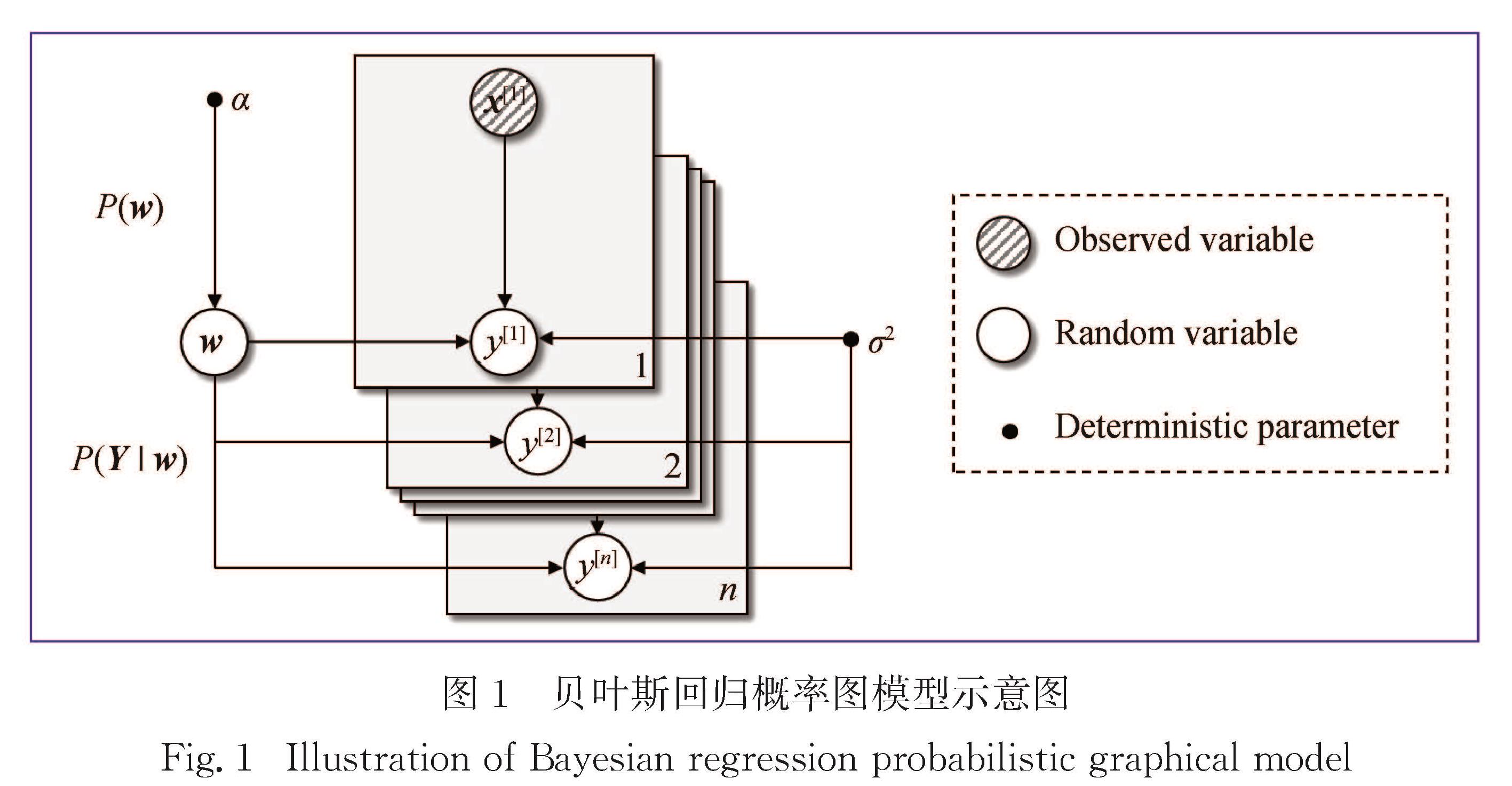
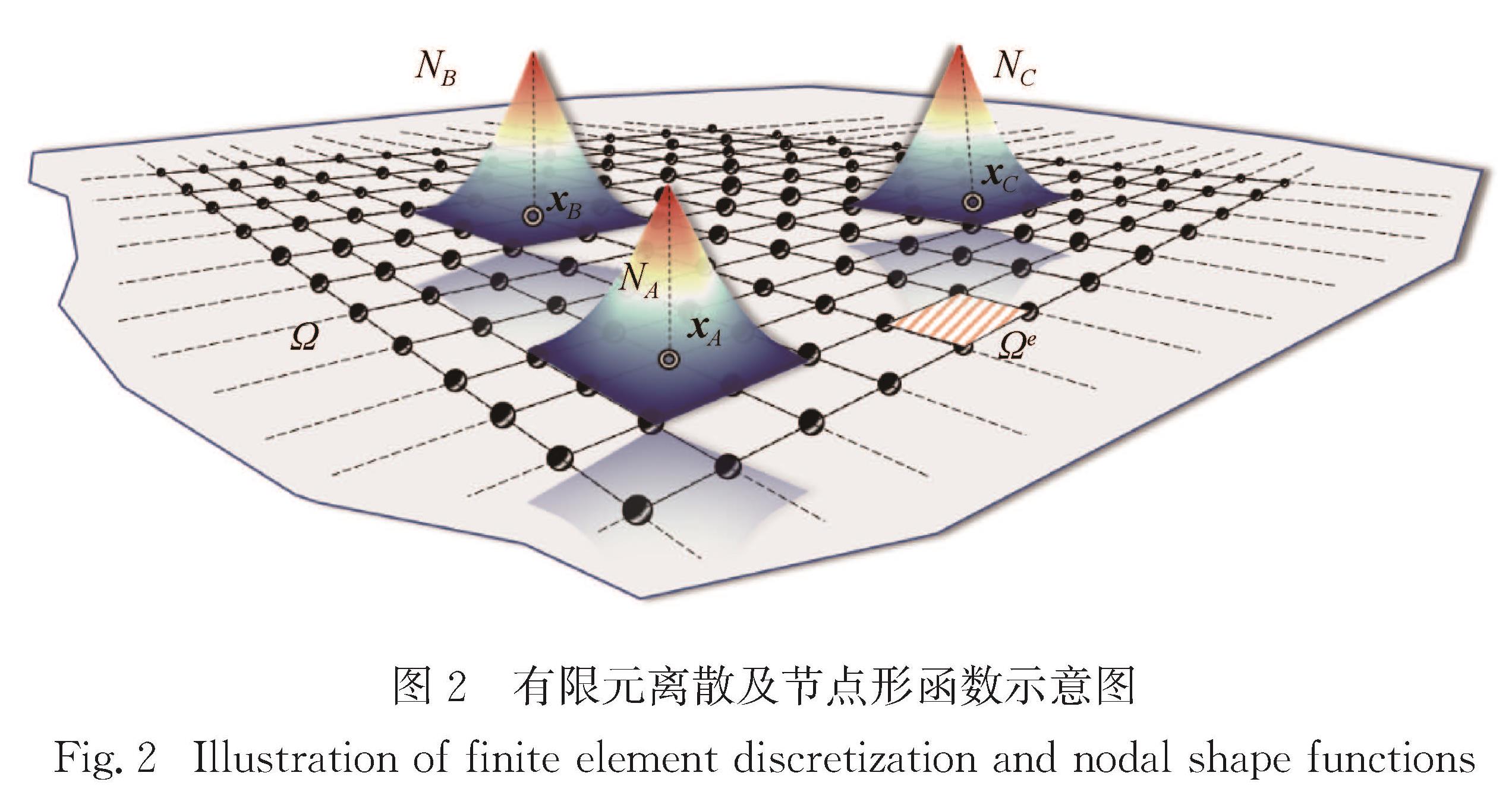
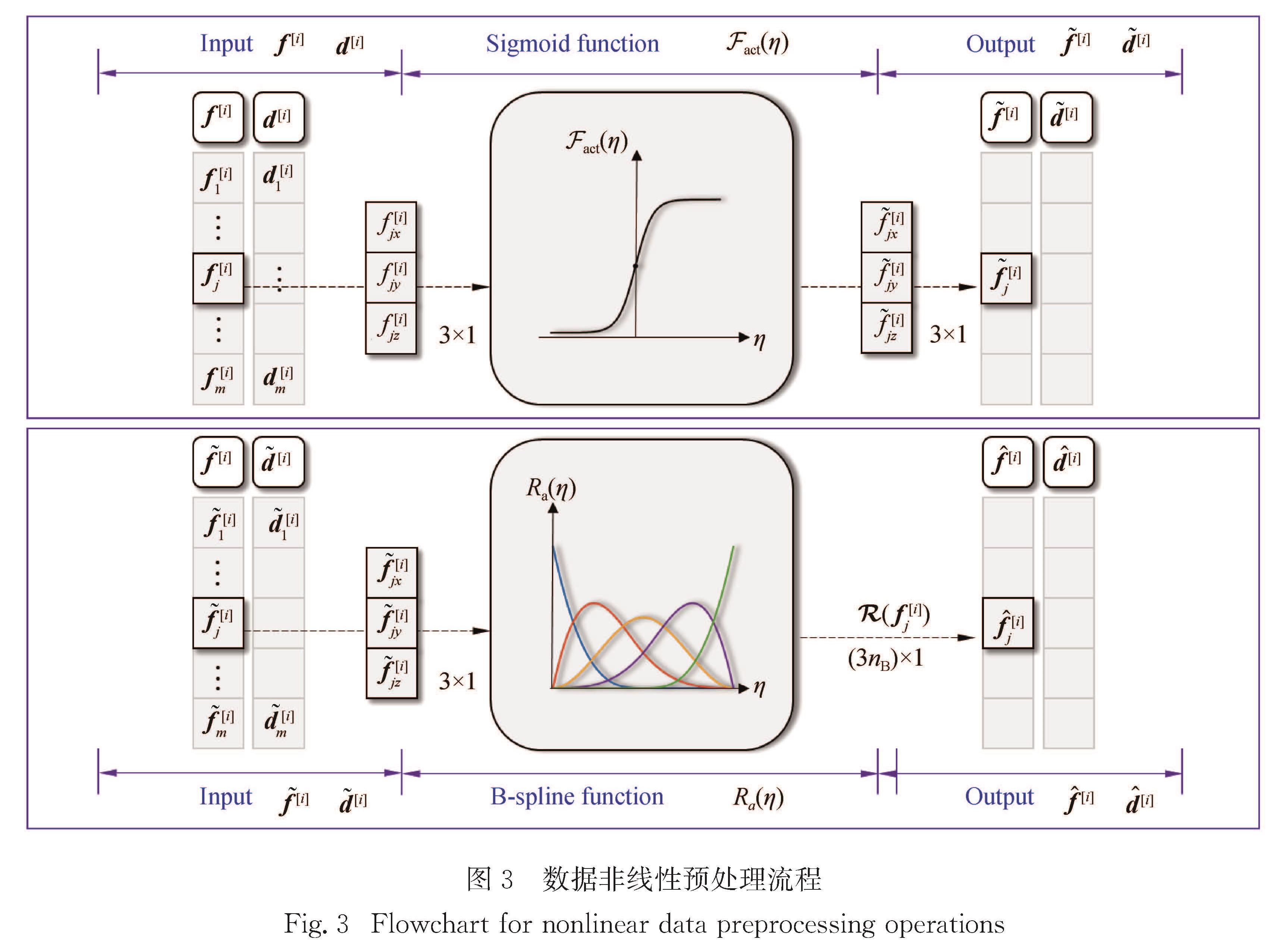
随着结构形式的日益大型复杂化,精细有限元分析由于受到网格尺寸和时间积分步长的限制,通常难以同时保证效率与精度.为了提升结构动力分析效率,本文首先根据有限元形函数影响域对有限元动力计算前期数据进行压缩提炼,构造动力计算的训练集.其次,通过引入激活函数和B样条基函数对训练集数据进行非线性预处理,提升结构关键节点的动力响应计算精度.最后,将预处理后的训练集和贝叶斯回归方法相融合,提出了一种结构动力响应贝叶斯回归代理模型.文中通过典型算例验证了所提代理模型在保证计算精度的条件下,能够明显提升结构动力分析的计算效率.
Objective: The increasing complexity of structures requires refined finite element analyses for better accuracies. Unfortunately, structural refinements inevitably demands small time steps, thus rendering dynamic analyses time-consuming. In this study, we strive to introduce Bayesian regression surrogate model so that both numerical properties, namely efficiencies and accuracies, are optimized.
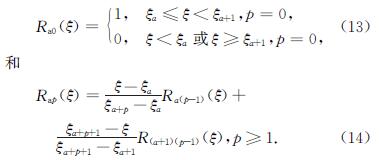
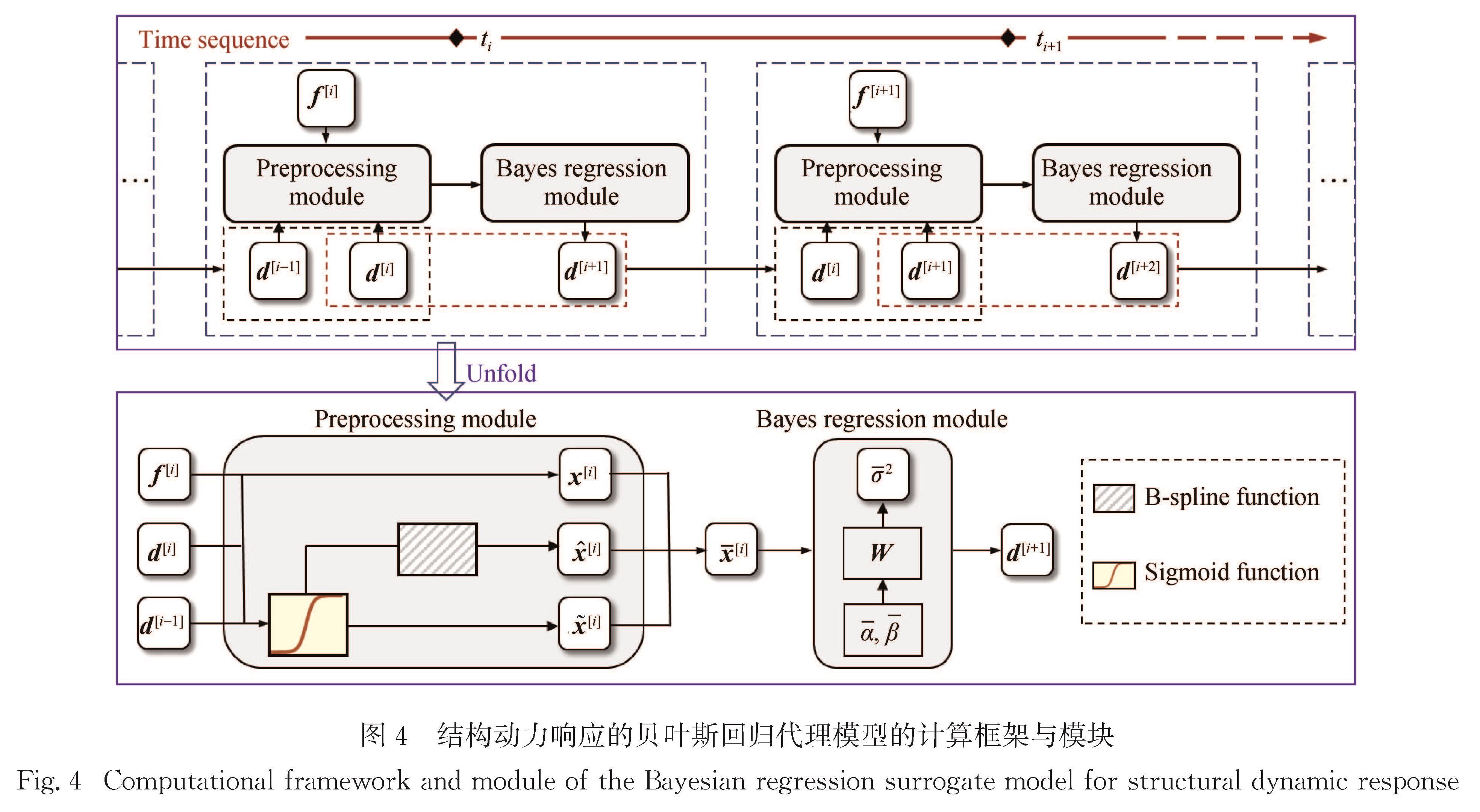
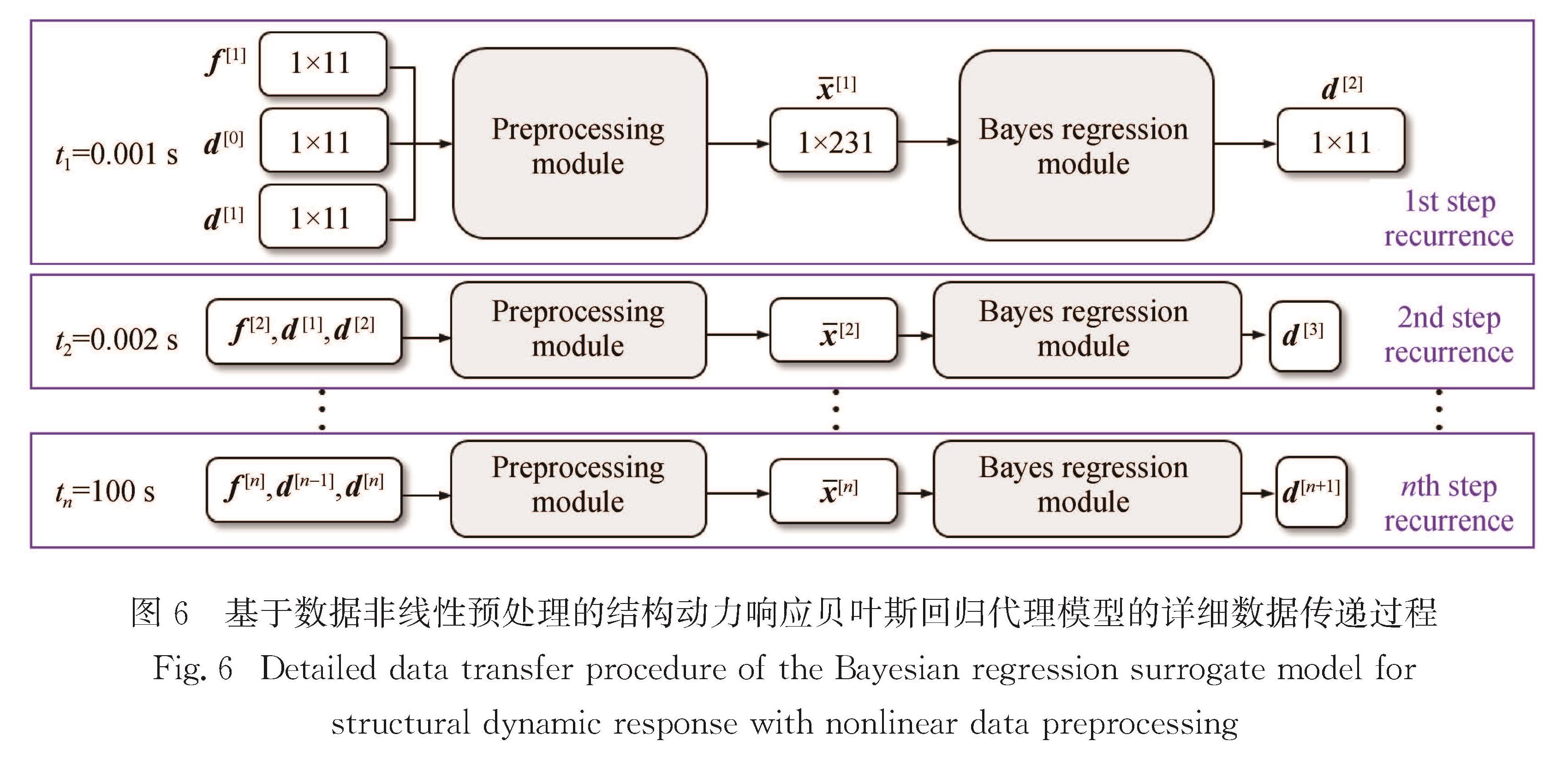
Methods: A Bayesian regression surrogate model is constructed based on a nonlinear data preprocessing. In particular, the dynamic analysis input dataset is formulated with displacements and stresses from the direct finite element analysis. This input dataset is then compressed by using the influence domains of finite element shape functions. Subsequently, for the purpose of enhancing the accuracy at key finite element nodes, a nonlinear data preprocessing approach is proposed to transform the dynamic analysis training dataset via introducing the activation and B-spline basis functions. The resulting training dataset is then merged with the Bayesian regression method to formulate a Bayesian regression surrogate model for structural dynamic analyses.
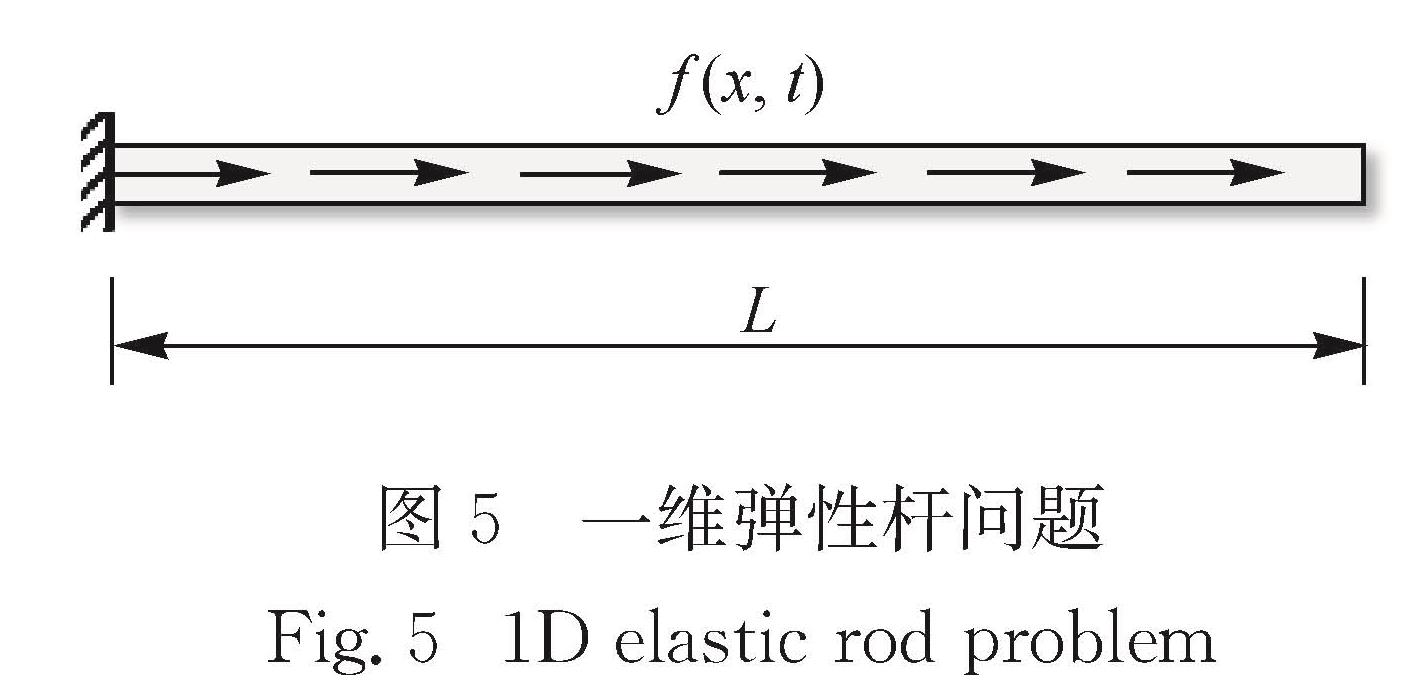
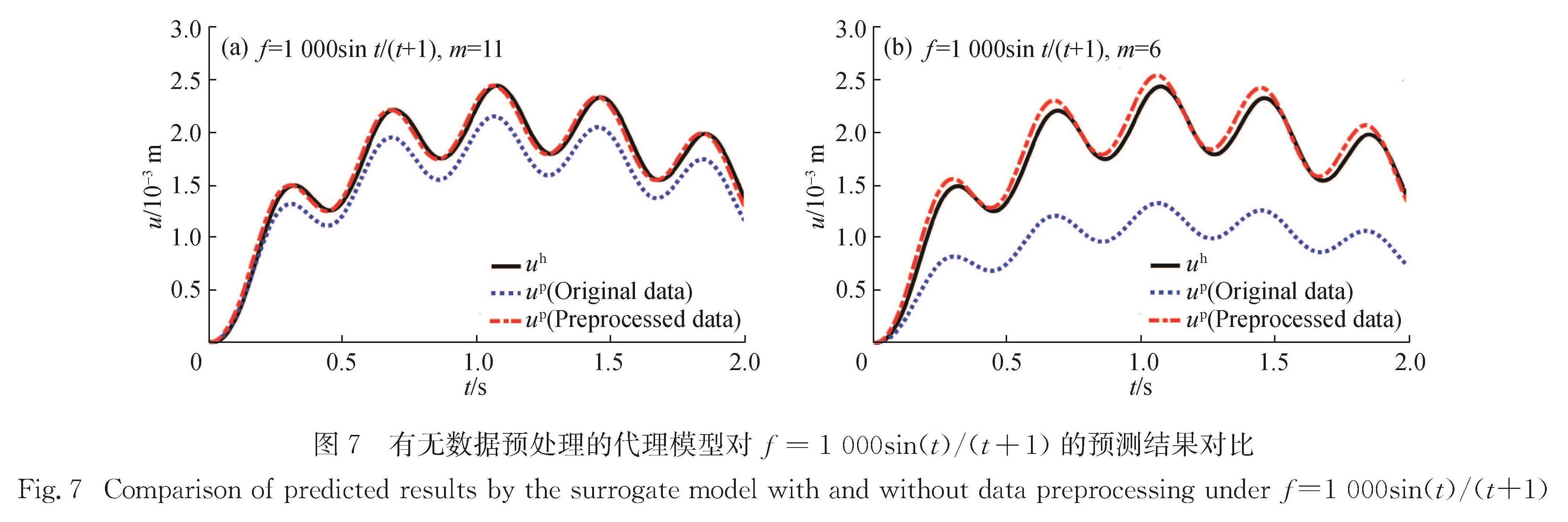
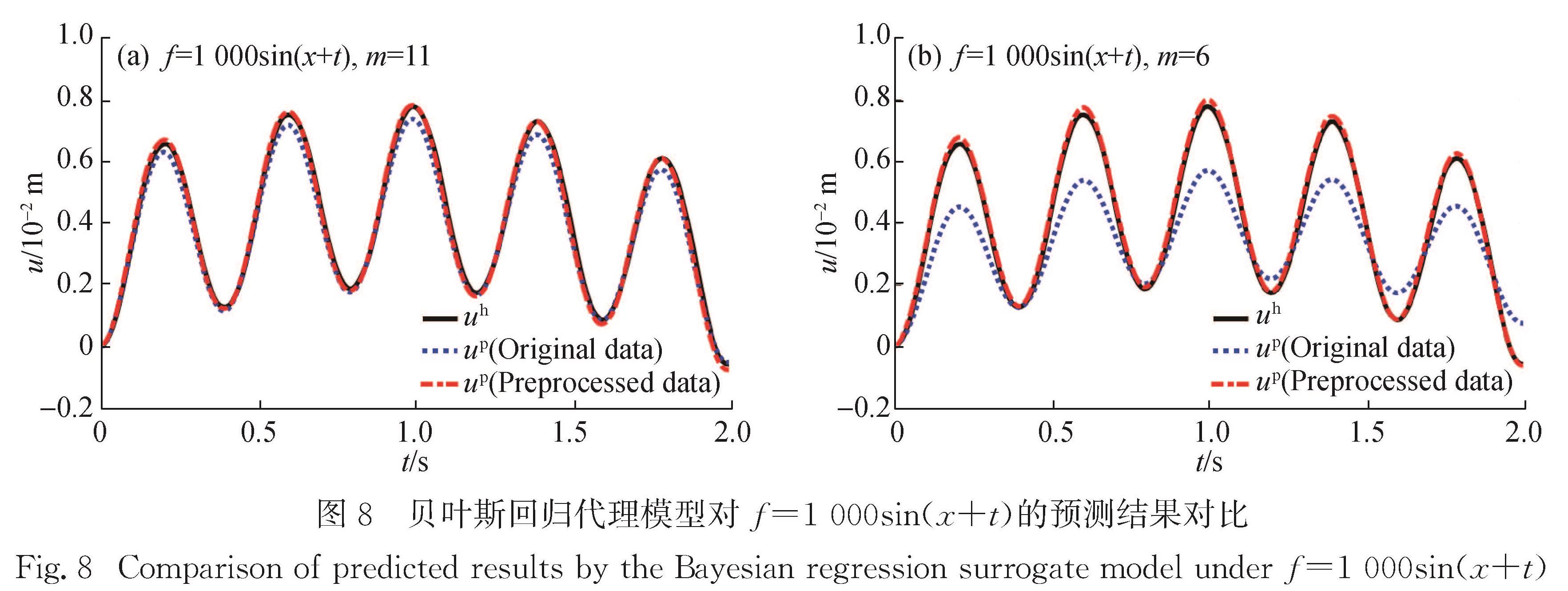
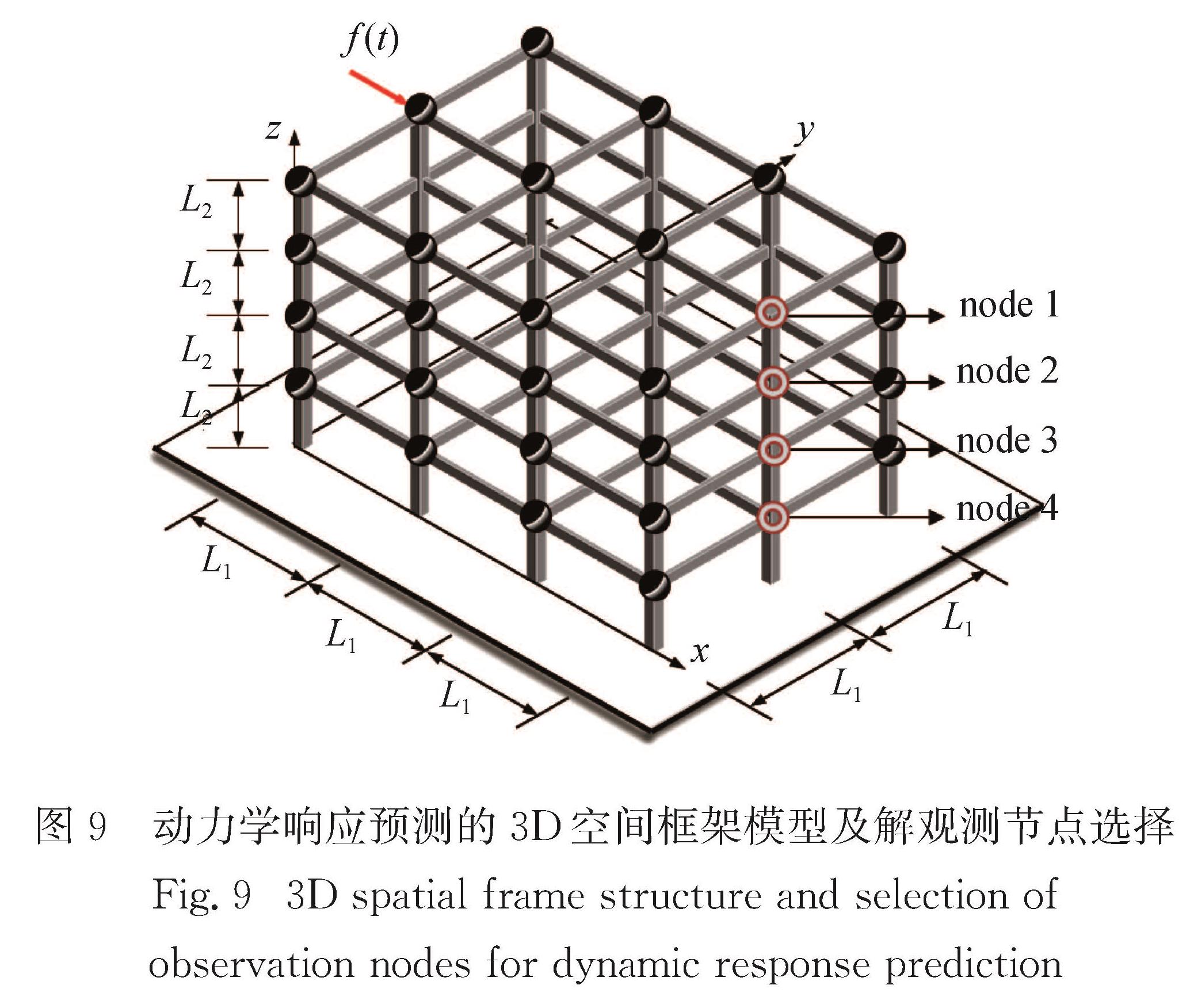
Results:A Bayesian regression surrogate model for structural dynamic responses is established. Numerical results are presented for the dynamic analysis of both one-dimensional and three-dimensional examples. They show that structural response predictions by the proposed Bayesian surrogate model agree satisfactorily with reference solutions obtained by direct finite element dynamic analysis, in which the Sigmoid activation function is used as the activation function and the cubic B-spline basis function is employed to enrich the dataset.
It is also found that the integrity of the training data exerts a significant impact on the prediction accuracy of the proposed Bayesian regression surrogate model trained directly using the original data. On the other hand, the proposed nonlinear data preprocessing approach can effectively improve prediction results under the condition of incomplete training data. In addition, by comparing the efficiency of the proposed Bayesian regression surrogate model and the direct finite element analysis, it is revealed that the proposed Bayesian regression surrogate model based on nonlinear data preprocessing can significantly improve the efficiency of structural dynamic analyses with satisfactory response accuracies.
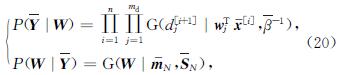
Conclusions:In the proposed surrogate model, the Sigmoid activation function is used to normalize and process the data in a nonlinear fashion, and then the nonnegative B-spline basis function is selected to expand the training data around key locations. Finally, a Bayesian regression surrogate model for structural dynamic dynamics is formulated by combining the nonlinear preprocessed dataset and Bayesian regression scheme. Numerical results reveal that the proposed Bayesian regression surrogate model with nonlinear data preprocessing can accurately assess the structural dynamic response, which agrees satisfactorily with solutions obtained by the costly direct finite element analysis. In particular, it is shown that the nonlinear preprocessing step can significantly improve the prediction results under incomplete training data. An optimal balance between the efficiency and accuracy was achieved in the proposed Bayesian regression surrogate model for finite element structural dynamic analyses.