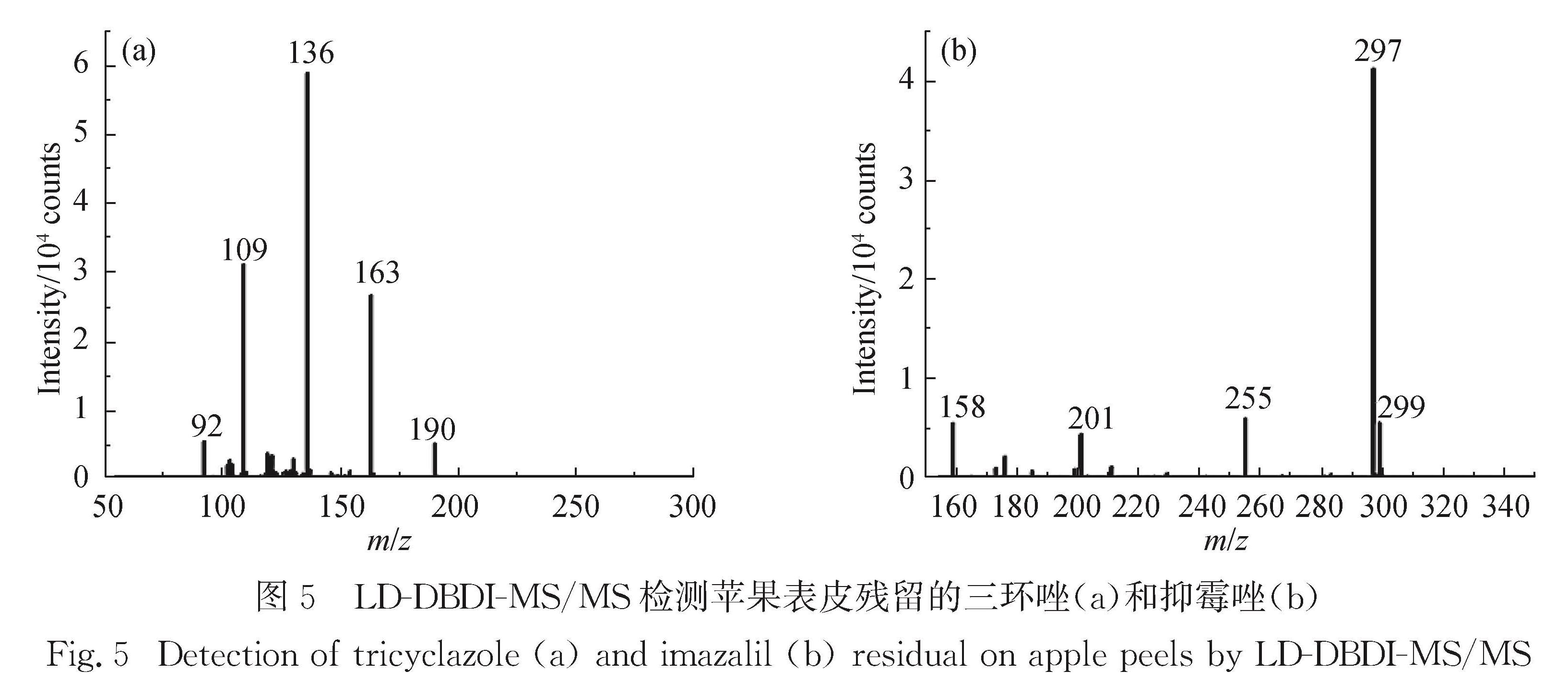
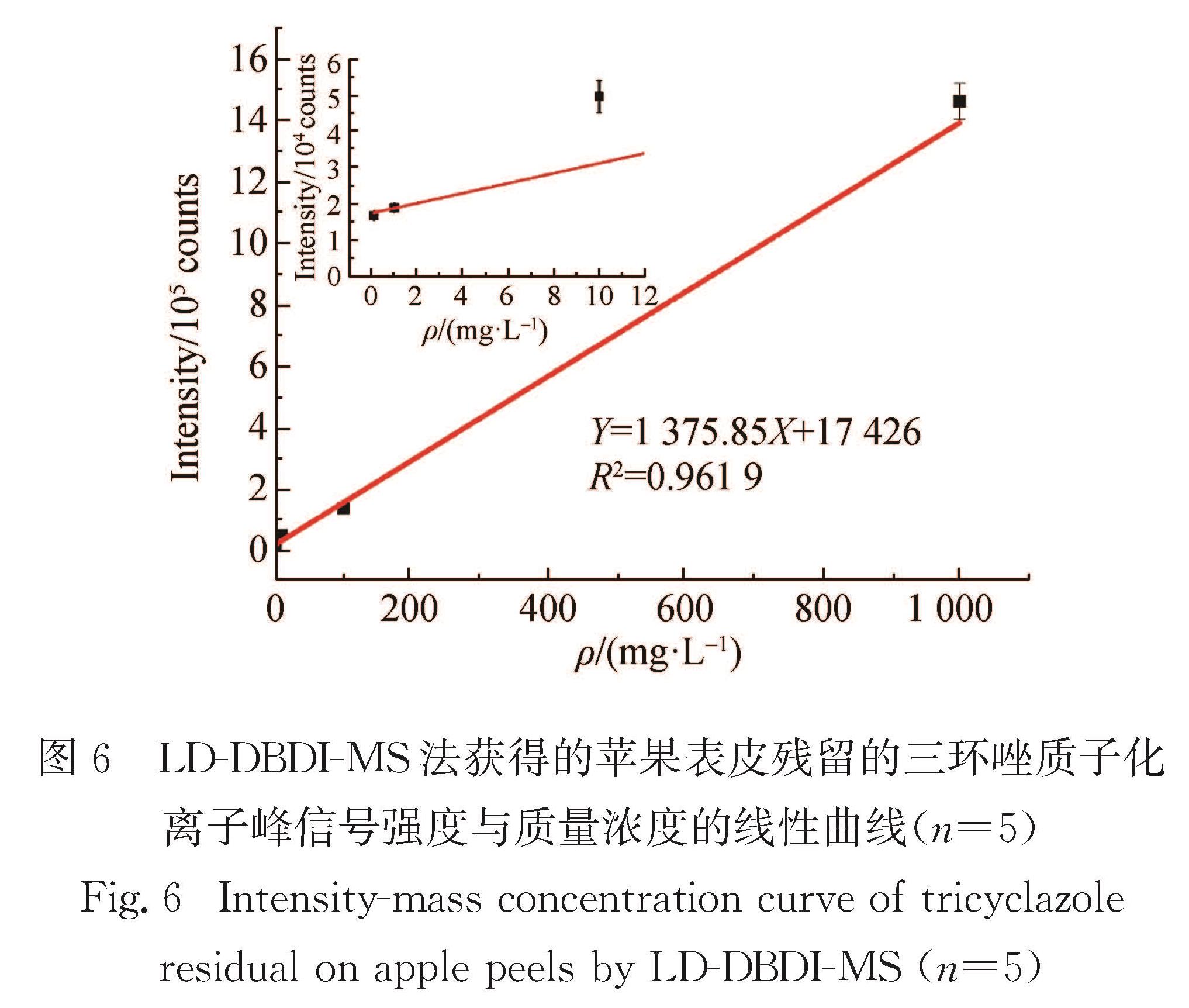
搭建了一台大气压激光解吸介质阻挡放电电离质谱(laser desorption coupled dielectric barrier discharge ionization mass spectrometry,LD-DBDI-MS),凭借DBDI源的高效、软电离特性,显著提高了检测灵敏度.利用该装置对苹果表皮的痕量农药残留进行原位定性和半定量检测.通过标准品加入法,建立了苹果表皮农药三环唑残留的标准定量曲线.苹果表皮三环唑的最低检测量低至1 ng(相当于130 μg/kg),远低于国家标准GB 2763—2019所规定的果蔬类三环唑的最大残留限量(2 mg/kg).该方法灵敏度高,稳定性好,无需样品前处理,1 min内便可完成单个样品的检测,因此LD-DBDI-MS可作为水果等复杂基质中农药分子超标的快速检测工具.
Objective s: With rapid development of agriculture and continuous emergence of new pesticides, pesticides have been used more and more widely in current agricultural production. Thereis no doubt that they can protect crops and increase the crop yield, but pesticide residues has been widely concerned. Long-term consumption of food with excessive pesticide residues will increase the burden of human liver and kidneys, causing chronic or even acute poisoning. Studies have shown that long-term exposure to pesticides can increase carcinogenesis and teratogenicity. According to their biological activities and analytical requirements, the maximum residue limits (MRLs) of pesticides in fruits and vegetables range from1μg/kg to 1 mg/kg . The maximum residual value of pesticides in fruits and vegetables has been strictly regulatedin China in order to reduce the harm caused by pesticides.
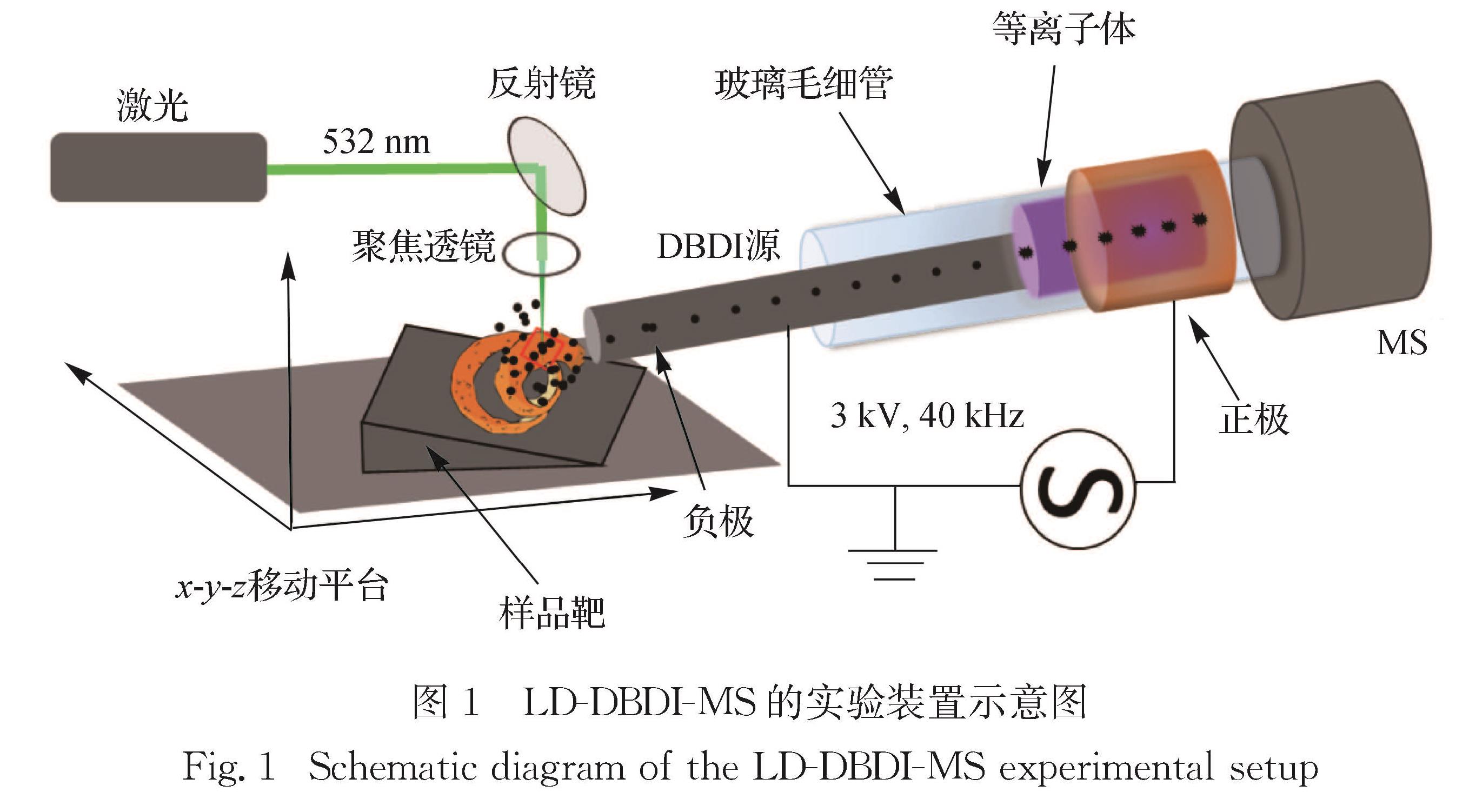
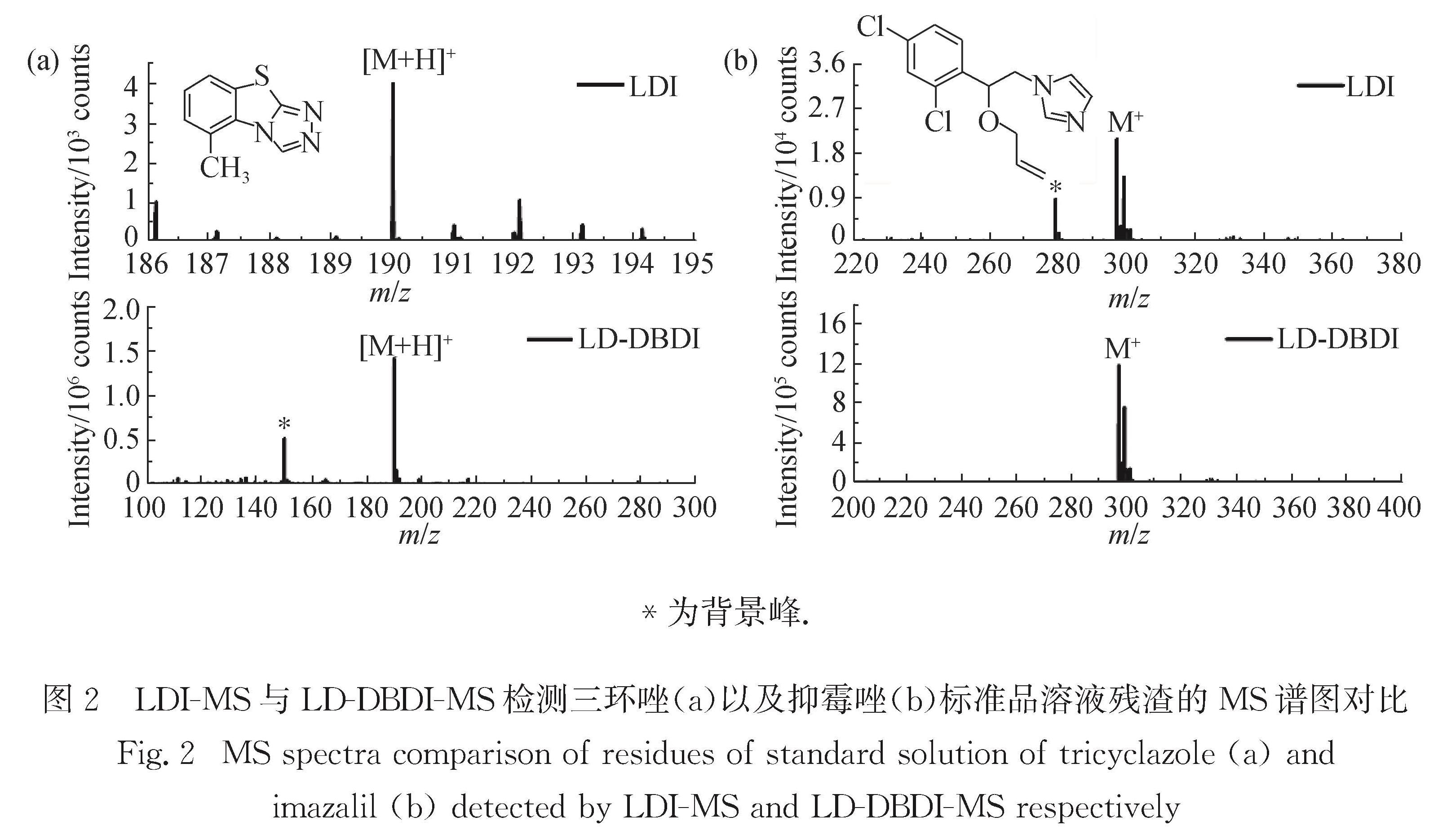
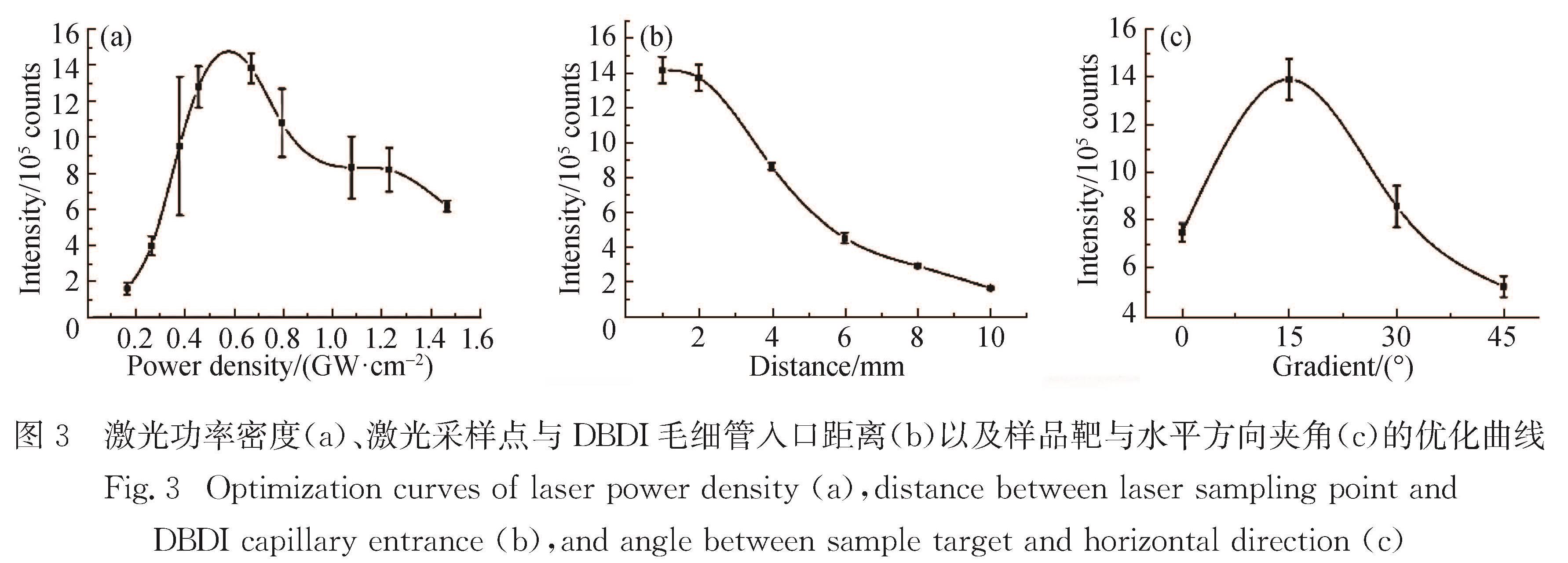
Methods :Dielectric barrier discharge ionization (DBDI) is a technique of ionizing surrounding vaporized molecules by applying an alternating current between electrodes separated by a dielectric material to produce low-temperature plasma. It can realize efficient soft ionization of neutral molecules without heating the sample. The device is small and can be directly connected with any atmospheric mass spectrometry. Since it was proposed in 2007, it has been widely used in the field of analysis and detection. Based on DBDI, a laser desorption coupled dielectric barrier discharge ionization mass spectrometry (LD-DBDI-MS) wasconstructed. Its main advantages are as follows:(1) Compared with traditional laser desorption post ionization technology, the device does not require solvent or additional gas assisted ionization, which reduces the complexity of the device. (2) The dielectric barrier discharge capillary tube is directly connected with the mass spectrometry capillary interface, which significantly improves the ionization and transmission efficiency as well as the stability of the detection signal. In this study, according to the signal intensity of protonated ion peak of tricyclazole, the laser power density, distance between laser sampling point and DBDI capillary entrance, and angle between sample target and horizontal direction were optimized firstly. Then LD-DBDI-MS was used to detect pesticide residues in complex matrix of apple peels in-situ qualitatively and semi-quantitatively.
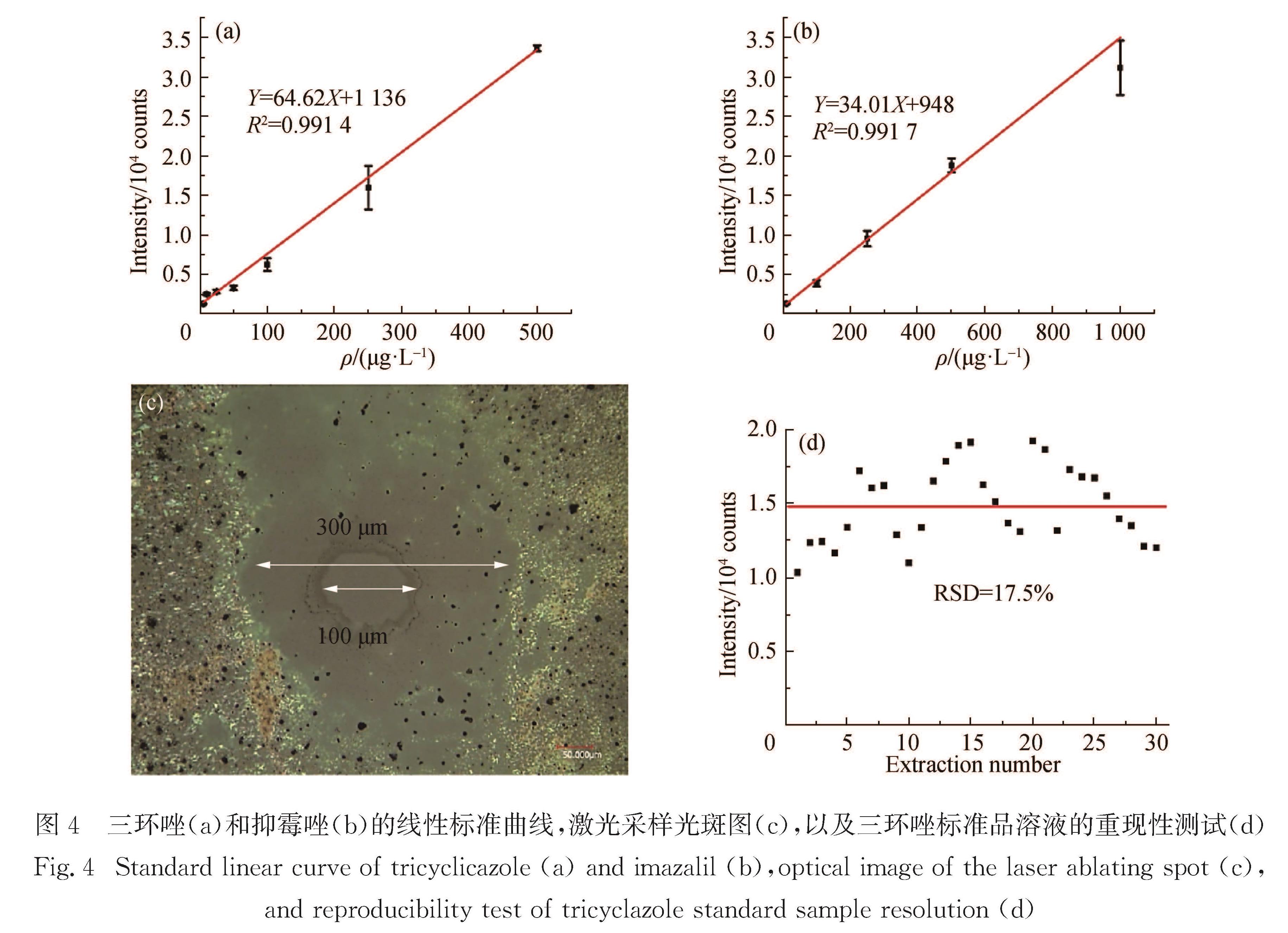
Results : In this study, we used LD-DBDI-MS combined with astandard addition method to establish a qualitative and semi-quantitative detection method totrace pesticide residues on apple peels. The method has good stability (relative standard deviation was 17.5%) and high sensitivity. The detection limit of the tricyclazole standard aqueous solution could be as low as 2 μg/L, and the minimum detection limitof the actual sample apple epidermal tricyclazole wasas low as 1 ng (equivalent to 130 μg/kg), which is far lower than theMRL of tricyclazole (2 mg/kg) for fruits and vegetables stipulated in the national standard GB 2763—2019. There wasa good linear relationship (R2 = 0.9619) in the concentration range spanning 4 orders of magnitude. Compared with traditional chromatographic separation-based technology, this method is simple to operate and does not require sample pretreatment and can achieve rapid in-situ detection of residual pesticide molecules in complex matrices within 1 min.
Conclusion s: LD-DBDI-MS combined the advantages of laser in-situ, fast and high-throughput sampling with the characteristics of high efficiency and soft ionization of dielectric barrier discharge, which realized the separation of molecular desorption and ionization in time and space and made it convenient for the two processes to beoptimized separately. Based on the design of active capillary sampling, no additional gas-assisted ionization was required.At the same time, the ionization and transmission efficiency were significantly improved. Thus, LD-DBDI-MS is expected to become a tool for rapid detection of pesticide residues that exceed the standard for fruits and other products.